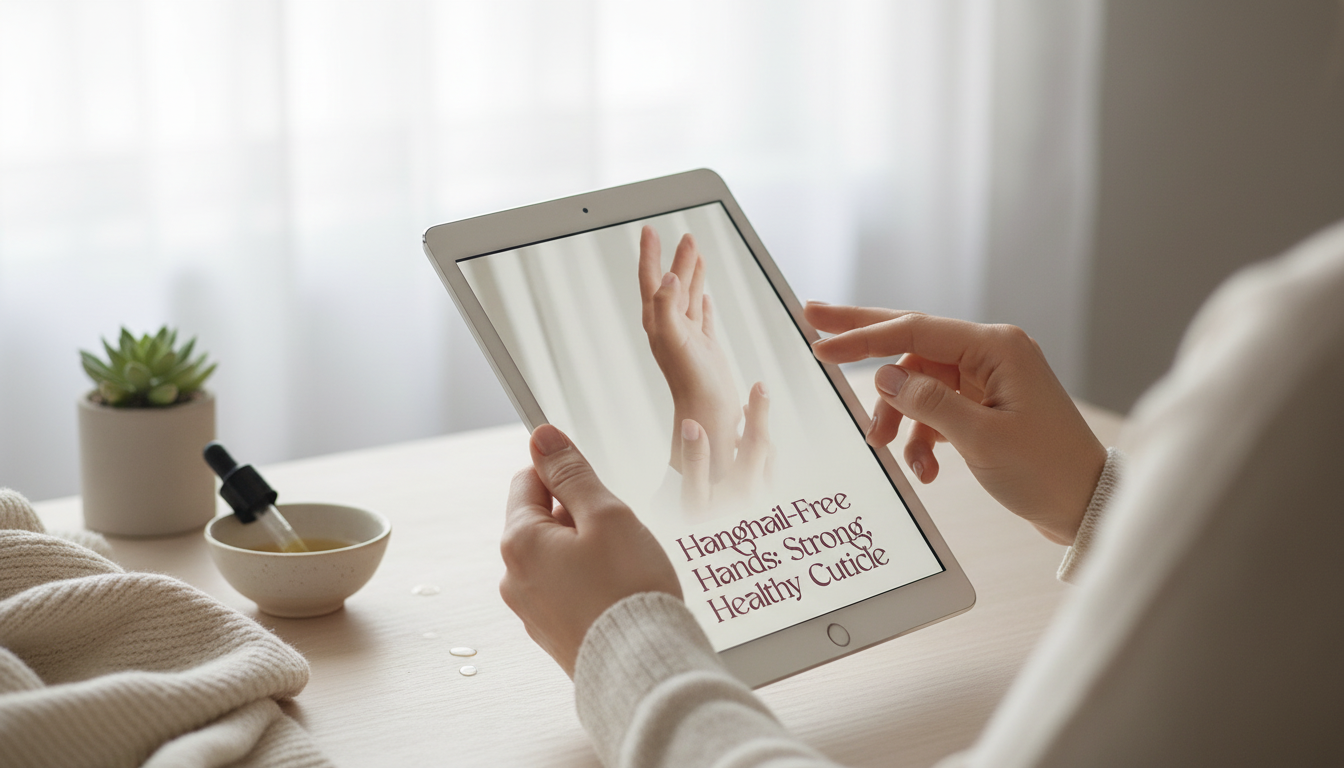
Hangnails are small but stubborn—often showing up when skin is dry, stressed, or repeatedly irritated. The good news is that most hangnails come down to a compromised skin barrier around the nail fold, and that barrier can be rebuilt with a few consistent habits. Below is a practical plan to calm irritation, prevent painful tearing, and keep cuticles smooth and resilient.
A hangnail is a torn piece of skin beside the nail—not the nail itself. That tiny flap can sting more than expected because the tear exposes sensitive tissue and can trigger swelling. When hangnails happen often, it’s usually a sign the skin barrier around the nail folds is weakened from dryness, friction, or repeated “micro-injuries.”
Picking and biting make things worse: tugging at a snag can create a deeper split that bleeds, stays inflamed longer, and is more likely to get irritated (or infected). If you want a quick reality check on nail and cuticle basics, the American Academy of Dermatology Association’s nail care guidance is a helpful reference point.
Hangnails rarely have a single cause. Most are the result of skin that’s repeatedly dried out or mechanically stressed—think frequent washing, cold weather, or aggressive manicure habits. Even “clean” routines can backfire if they strip oils faster than you replace them.
| Trigger | Why it causes hangnails | Quick fix | Long-term habit |
|---|---|---|---|
| Frequent handwashing/sanitizer | Removes protective lipids | Apply hand cream after drying | Keep a small cuticle oil/cream at every sink |
| Cuticle cutting | Creates breaks in the protective seal | Pause trimming; moisturize | Gently push back only after softening; avoid cutting living skin |
| Picking/biting | Worsens tears and delays healing | Cover with a bandage | Use a bitter nail coating or fidget substitute; keep nails neatly filed |
| Detergents/cleaners | Irritate and dry skin | Rinse well; moisturize | Wear gloves for dishes/cleaning |
| Cold/dry weather | Promotes cracking | Thicker ointment at night | Humidifier + nightly occlusive layer |
Other contributors can include dehydration or nutritional gaps that affect skin resilience. While supplements aren’t a magic fix, staying well-hydrated and eating a balanced diet supports overall skin integrity—especially when your hands are frequently exposed to water and irritants.
The goal is to remove the snag safely, reduce inflammation, and protect the area so it can seal back up.
If you notice spreading redness, warmth, swelling, pus, red streaking, or worsening pain, seek medical advice. For a quick overview of hangnail causes and treatment, the Cleveland Clinic’s hangnail guide is a solid, practical resource. If infection is a concern, MedlinePlus on paronychia explains common warning signs.
Consistency beats intensity. The fastest way to reduce hangnails long-term is to restore the “soft seal” around the nail folds with frequent, small doses of moisture—then protect it from repeat stripping.
If you like having a clear plan to follow, keep a concise reference on hand like Hangnail-Free Hands: Strong, Healthy Cuticle (digital download), which is easy to revisit when your routine slips during travel or seasonal weather changes.
Many hangnails start with well-intentioned grooming. The cuticle area is protective tissue, not “extra” skin to remove aggressively. Small upgrades to technique can dramatically reduce snags.
Organization helps, too: when nippers, files, bandages, and balm are easy to grab, you’re less likely to tear a snag in frustration. A dedicated storage spot like the 360° Rotating Makeup Organizer with Brush Holder & Drawer – Large Capacity can double as a neat “nail-care station” for at-home touch-ups.
Cutting living cuticle tissue can weaken the protective seal around the nail, making tearing and irritation more likely. Instead, soften the area first and gently push back; trim only clearly dead, detached skin if needed.
Wash, then snip the loose skin cleanly (don’t pull), optionally soak in warm water for 5–10 minutes, and seal with a thick ointment plus a bandage. Seek medical care if redness, swelling, warmth, pus, streaking, or worsening pain develops.
Low humidity and repeated washing/sanitizer use strip protective oils, leading to barrier damage and cracking around the nail folds. Moisturize right after washing, use a thicker ointment at night, and consider a humidifier during dry seasons.










Leave a comment