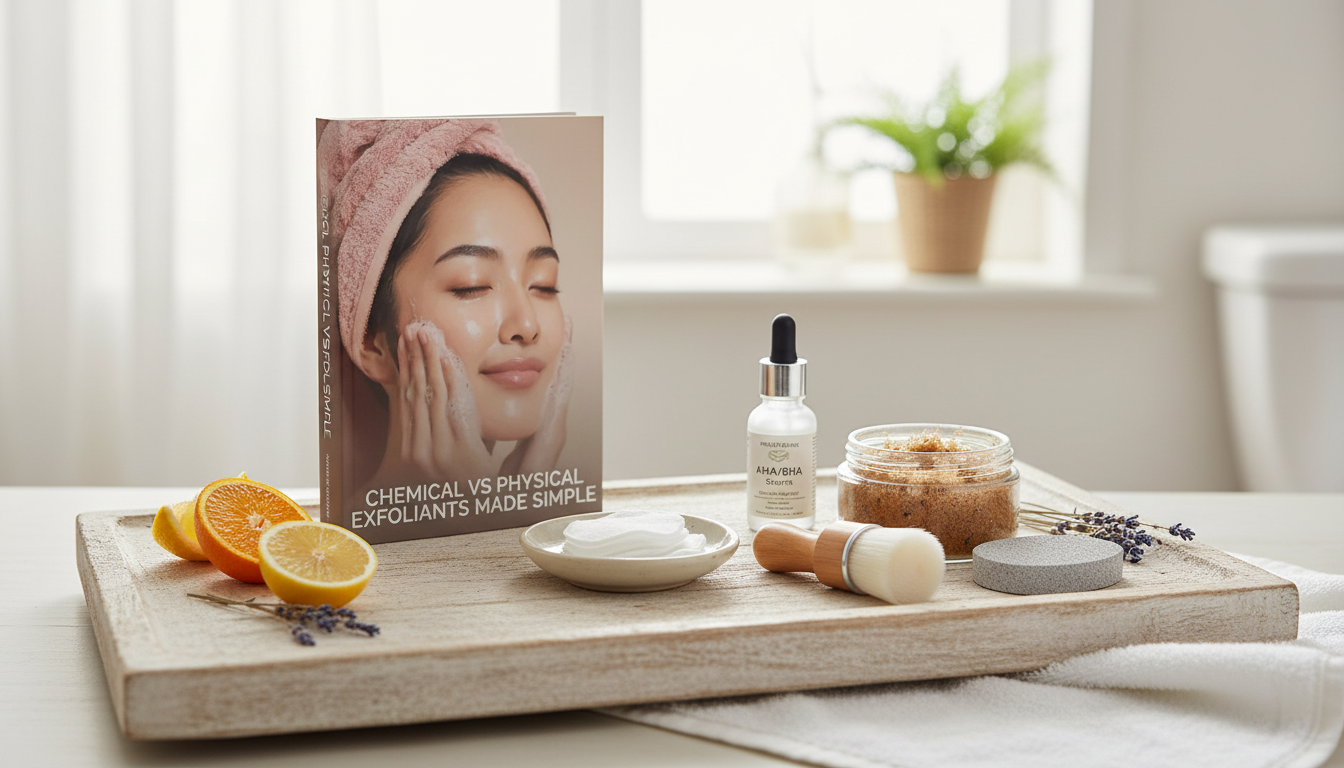
Exfoliation can brighten dull skin, smooth texture, and help prevent clogged pores—when the right method is used at the right time. The key is choosing an exfoliant that matches your skin type, then using it at a frequency your skin barrier can handle. Below is a straightforward breakdown of chemical vs physical exfoliants, how to pick the best option for your goals, and how to build a routine that stays calm, comfortable, and consistent.
Exfoliation removes built-up dead skin cells that can make skin look dull and feel rough. When it’s done well, skin tends to look smoother, feel softer, and show fewer visible flakes—plus skincare and makeup often apply more evenly.
When it’s done too often (or too aggressively), the results can flip fast: tightness, stinging, redness, new sensitivity, and sometimes more breakouts caused by barrier disruption. That’s why a healthy routine treats exfoliation like a “supporting step,” not the foundation of skincare.
Keep the basics steady alongside exfoliation: a gentle cleanser, a simple moisturizer, and daily sunscreen. For practical safety guidance, the American Academy of Dermatology Association emphasizes choosing the right method for your skin and avoiding over-exfoliation.
Chemical exfoliants use acids or enzymes to loosen the “glue” between dead skin cells so they shed more evenly. Instead of scrubbing, you apply them and let them do the work over a set contact time (especially with leave-on products).
Chemical exfoliants are a strong fit for uneven texture, post-breakout marks, visible congestion, and areas where scrubs feel too rough. They come in many formats—leave-on toners, serums, pads, masks, and some cleansers (cleansers tend to be milder because contact time is short). For an overview of acid-based exfoliation and safety basics, see the Cleveland Clinic’s guide to chemical peels.
Physical exfoliants manually lift dead skin cells using particles or tools. The main benefit is immediacy—skin can feel smoother right after use. The main downside is that results depend heavily on technique, pressure, and how abrasive the particles or tool are.
| Feature | Chemical exfoliants (AHA/BHA/PHA) | Physical exfoliants (scrubs/tools) |
|---|---|---|
| How it works | Loosens bonds between dead cells for more even shedding | Manually buffs off dead cells with particles or friction |
| Best for | Texture, dullness, congestion; BHA for oily/clogged pores | Instant smoothness; body roughness; occasional facial flakes |
| Common mistakes | Using too often, stacking actives, skipping sunscreen | Pressing too hard, using sharp/gritty scrubs, overdoing frequency |
| Irritation risk | Medium if too strong or too frequent; often manageable by lowering frequency | Can be high if technique is rough; depends heavily on pressure and particle type |
| Beginner-friendly pick | Low-strength lactic acid or PHA 1–2x/week; BHA 1–2x/week for oily areas | Soft washcloth or gentle, round-bead scrub used lightly 1x/week |
Avoid stacking strong actives at first. Combining exfoliating acids with retinoids and/or benzoyl peroxide in the same routine can be too much for many people. If you use acne treatments, the Mayo Clinic’s acne treatment overview is a helpful reference for active ingredients like salicylic acid and general self-care.
If you want a quick reference to keep your routine simple, the Chemical vs Physical Exfoliants Made Simple | Skincare Guide for Glowing, Smooth Skin | When Should I Use Chemical Exfoliants vs Physical Exfoliants? is an easy way to revisit the basics and avoid overdoing actives.
For at-home comfort-focused facial care on non-exfoliation days, consider the Ice Warm Therapy Skin Tightening & Anti-Wrinkle Facial Lifting Device as a simple warm/cool routine step that pairs best with barrier-support nights.
Keeping skincare and tools organized can also make routines more consistent; the 360° Rotating Makeup Organizer with Brush Holder & Drawer – Large Capacity helps keep daily essentials in reach so exfoliation stays an occasional step—not a chaotic one.
Night is often preferred to reduce sun sensitivity concerns. If used in the morning, applying sunscreen (and reapplying as needed) is essential.
Yes, but it’s usually best to separate them by days and keep total exfoliation frequency low. Avoid using both in the same routine until your skin’s tolerance is well established.
Start with about 1x/week, then increase only if skin stays calm and comfortable. Many sensitive or dry skin types do best at 1x/week (or less), while resilient oily skin may tolerate 2–3x/week.












Leave a comment